
BACKEER Partner with us

Biosensing through light.

We develop optical fiber biosensors for sensitive, label-free detection of clinically relevant biomarkers.

From high-sensitivity single-mode fiber sensors
to portable smartphone‑read biosensing.

Explore our technology
  • Developed within
  • Nazarbayev University, National Laboratory Astana
  • Jas Ventures
  • Recognized by
    • Chinese Association of Inventions (CAI) Award 2025
    • HKUST-SINO Silver Award 2025
  • Participated in
    • Founder’s Weekend by Nazarbayev University
    • Techathon+ by HKUST

The clinical need

Early detection can change outcomes.

Biomarkers can provide valuable information about disease, but translating sensitive biomarker detection into practical clinical tools remains challenging.

80% Early stage Survival rate
30% Late stage Survival rate

Survival rate, early vs late-stage oral cancer.[1]

3–4 weeksto get diagnostic results today
from $300per diagnosis in Kazakhstan, from $2,000 in the USA
  • Clinically relevant biomarkers

    Biomarkers can reveal disease-associated changes before clinical symptoms appear.

  • Detecting low-abundance biomarkers

    Disease-associated biomarkers can occur at very low concentrations, creating a need for highly sensitive detection.

  • Toward more accessible tools

    Complementary sensing approaches can help move biomarker measurement toward simpler, more portable formats.

BACKEER is developing complementary optical biosensing technologies to address different parts of this challenge.

  1. [1] Franzmann E.J., Donovan M.J., Expert Review of Molecular Diagnostics 18 (2018) 837–844.
Our technology

Two platforms. One sensing principle.

Complementary optical fiber technologies designed for different sensing needs.

SMF biosensors

High-sensitivity fiber biosensing

Functionalized single-mode silica fiber sensors for highly sensitive, label-free detection of clinically relevant biomarkers.
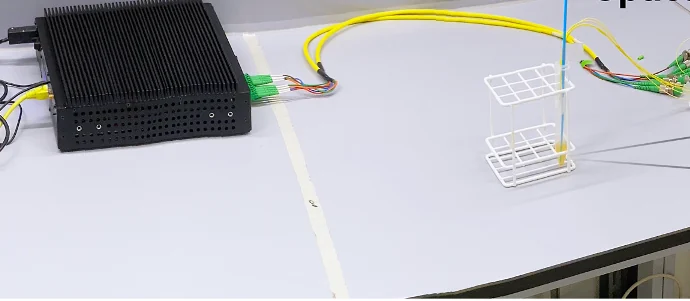
Optical interrogator connected by optical fibers to a fiber sensor in a sample tube Interrogator Fiber sensor in sample
  • 125 µm fiberMiniaturized
  • Interrogator-readPrecision optical readout
  • Attomolar sensitivitySelected biomarkers
  • Clinical samplesDemonstrated

Explore SMF platform

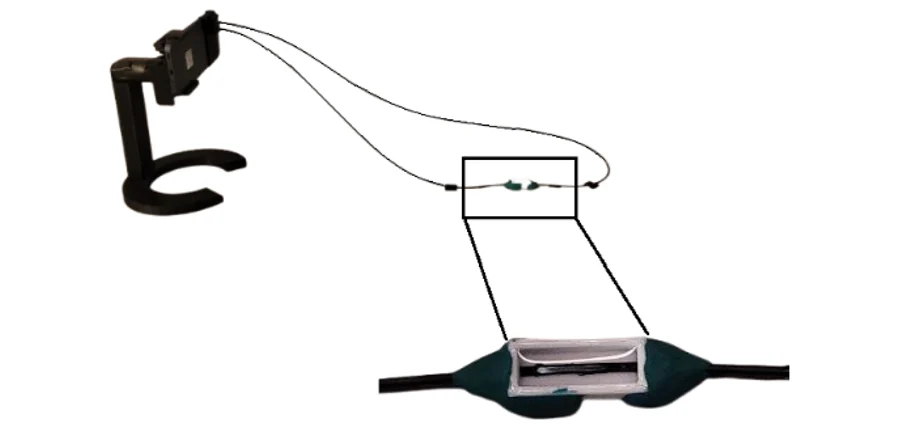
POF + smartphone

Portable smartphone-read biosensing

Functionalized plastic optical fiber sensors using a smartphone as the optical source, detector and analysis interface.

Smartphone in a 3D-printed holder connected by plastic optical fiber to the D-shaped fiber sensor in a sample cuvette, shown enlarged Smartphone Fiber sensor in sample
  • 1 mm POFFlexible sensing fiber
  • Smartphone-readFlashlight + camera
  • PortableLightweight setup
  • Artificial salivaIL-8 demonstrated
Explore POF platform

A biomarker binds. The light changes. We measure it.

An antibody-coated optical fiber tip captures the target biomarker, and the reflected light shifts. No labels, no lengthy lab processing.

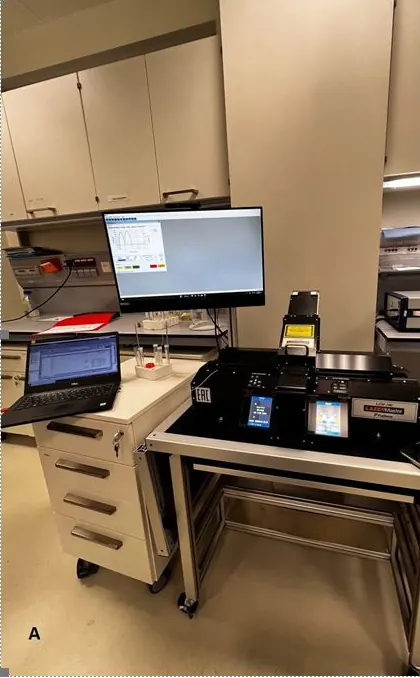
  1. 1 mIt starts in our lab, with standard optical fiber.
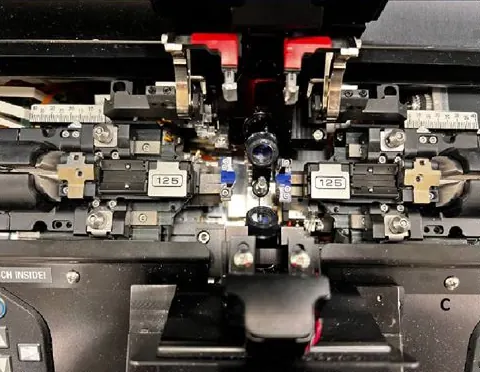
  2. 1 cmA CO₂ laser splicer melts its tip into a sphere.
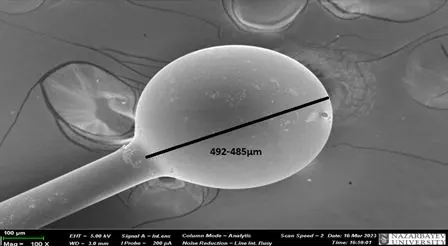
  3. 100 µmUnder the electron microscope: a ~490 µm glass sphere.
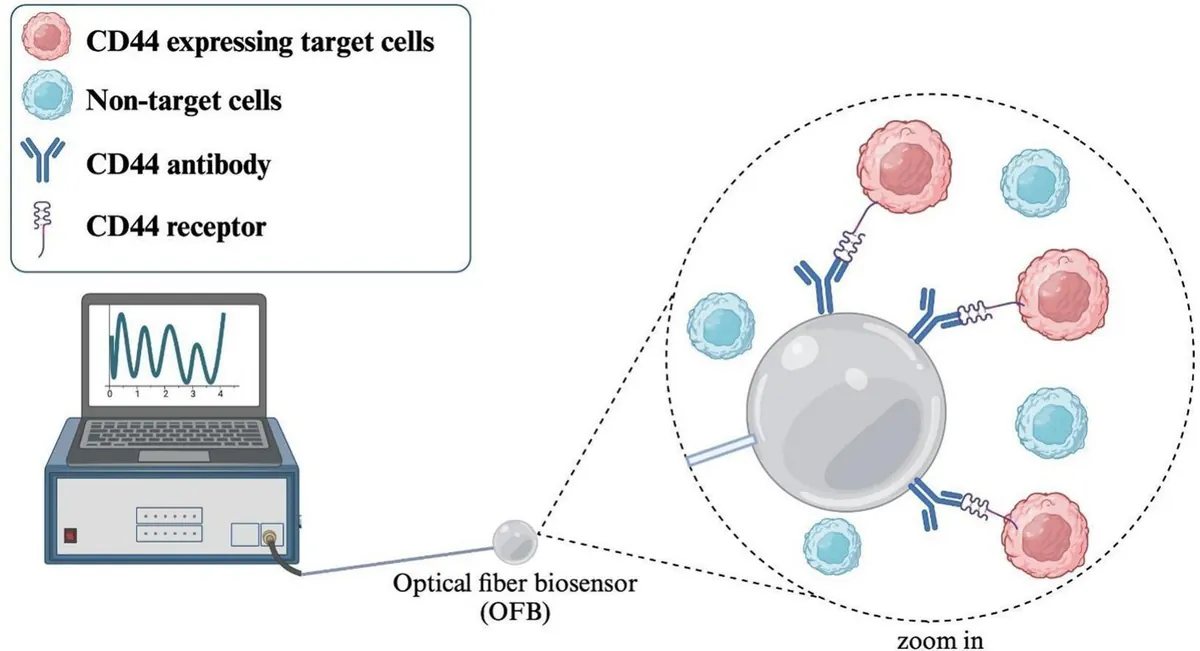
  4. 10 µmAntibodies on its surface catch one biomarker, such as CD44.
  5. 10 nmBinding changes the refractive index at the surface.
  6. λThe reflected spectrum shifts. We measure the shift.
BACKEER lab bench with the laser splicer and analysis computer
1 mIt starts in our lab, with standard optical fiber.
Inside the CO2 laser splicer: two fiber holders marked 125 aligned around the fiber
1 cmA CO₂ laser splicer melts the fiber tip into a sphere.
Electron micrograph of the sphere with its 485 to 492 micrometre diameter marked
100 µmUnder the electron microscope: a ~490 µm glass sphere on a 125 µm fiber.
Diagram: CD44 antibodies on the sphere capture CD44-expressing cancer cells
10 µmAntibodies on its surface catch one biomarker, such as CD44 on cancer cells.
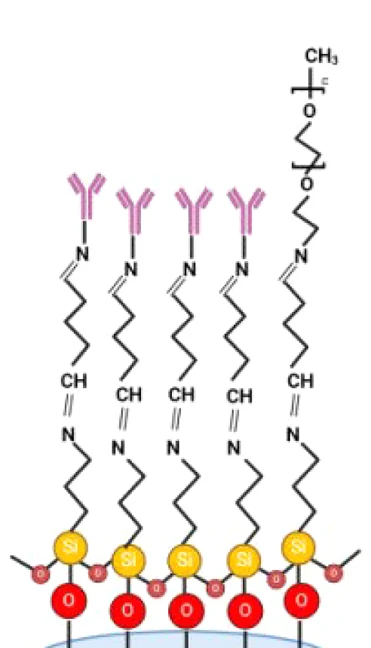
Diagram of antibodies immobilized on the fiber surface
10 nmWhen the biomarker binds, the refractive index at the surface changes.
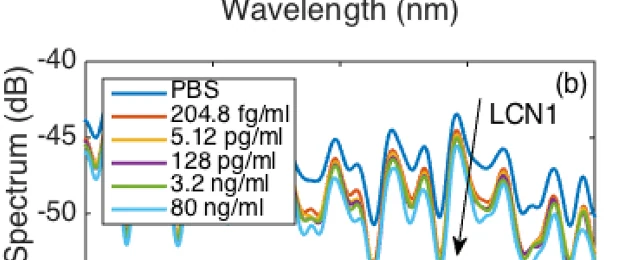
Measured reflection spectra shifting as LCN1 concentration rises
λThe reflected spectrum shifts, and we measure that shift.

$35–50 per test.

Target cost, compared with $100–550 for current methods.

BACKEER biosensor
$35–50
Solid-phase ligation assay
$100–150
OncAlert
$200–220
ELISA kits
$300–550

Per-test cost. BACKEER figure is a target at production scale; competitor figures from BACKEER's market analysis.

Built to detect what matters.

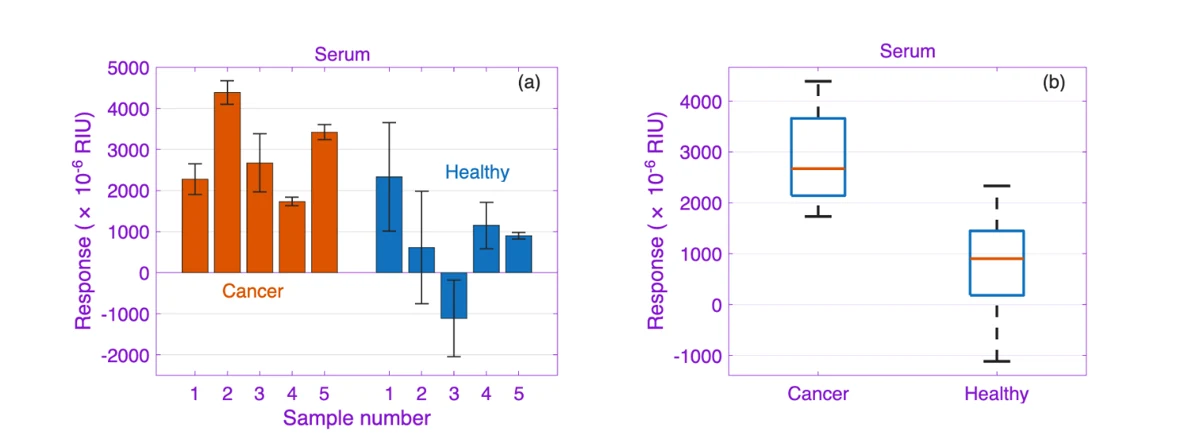
Bar chart and box plot: CD44 sensor response higher in breast cancer patient serum than in healthy serum
CD44 in serum: breast cancer vs healthy
Platform
SMF (SDI)
Key result
175 aM · clinical serum and urine
Publication
ACS Sensors (accepted)

From lab to clinic.

  • Kazakhstan patent granted

    Patent No. 9677 · 2024
  • 5+ letters of intent from clinics

    Clinical partners
  • Ethics approval for IL‑6/IL‑8 studies

    IREC certificate
  • HKSTP pre-incubation, Hong Kong

    Hong Kong Science & Technology Parks
  • US patent filed

  • 2 pilots starting

  • Clinical studies underway